To support further growth and improve project manageability, the company’s management decided to implement modern digital tools and professional project management methodologies.
Project Goal
The key objective of the collaboration was to train the company’s employees in professional project management methods and approaches using MS Project Pro and MS Project Online. It was important not only to teach employees how to work with the software products, but also to develop in them:
- a deep understanding of modern project management methodology;
- practical skills in planning timelines, costs, and resources;
- the ability to monitor project execution at every stage;
- the capability to work with a project portfolio within a unified corporate system.
The project was conducted in September 2018 in the format of a specialized training program.
Tasks Set by the Company’s Management
During the engagement, I was assigned the following tasks:
- training employees in professional planning of project timelines and scope;
- mastering principles of cost calculation and cash‑flow management;
- developing skills in allocating and controlling labor resources;
- training in recording actual progress, analyzing variances, and replanning;
- mastering corporate tools for project portfolio management;
- implementing practices for daily use of MS Project Pro and MS Project Online.
Solution: Delivering a Comprehensive Training Program
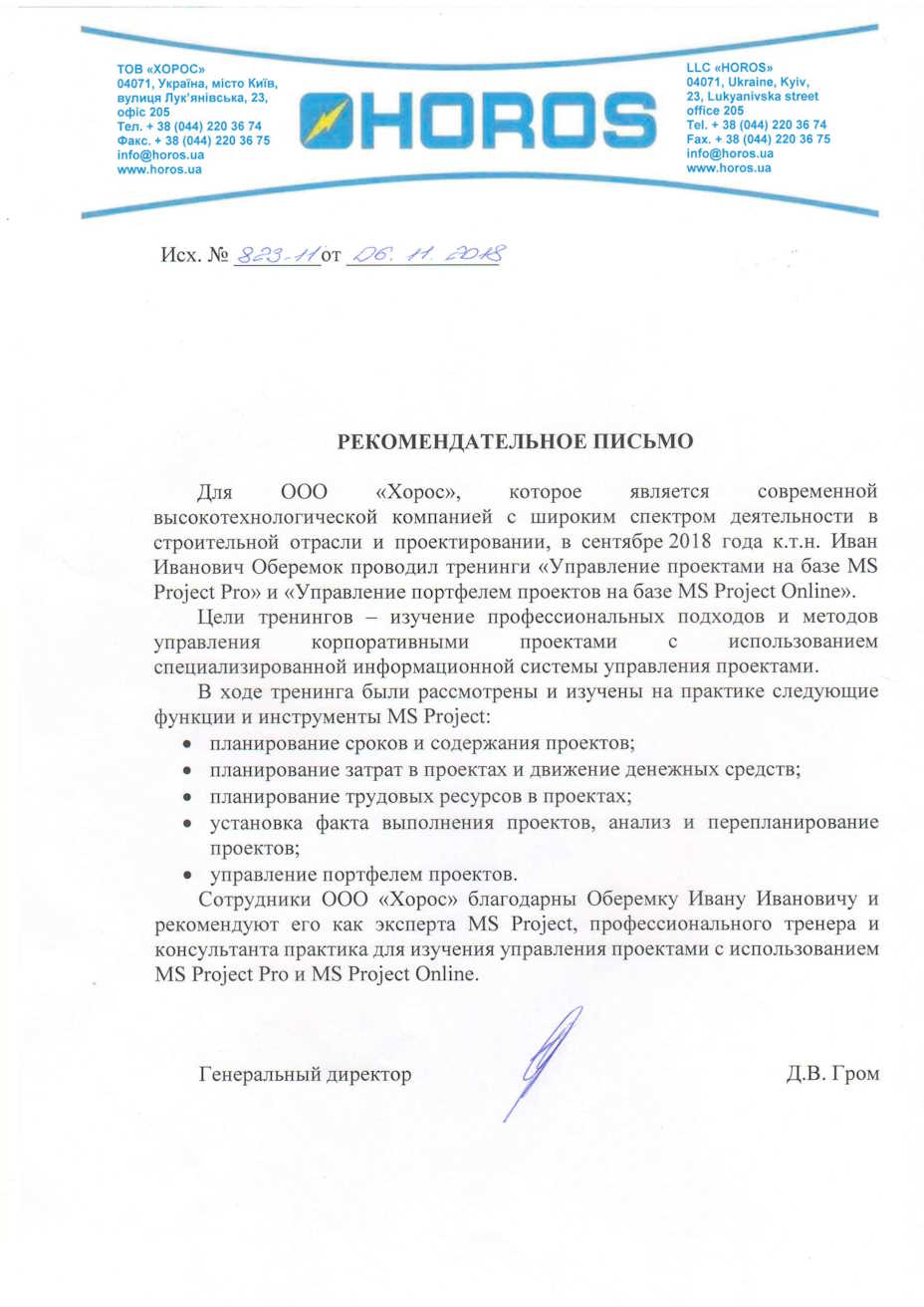
The company received a specialized training course, “Project Management Based on MS Project Pro and MS Project Online,” aimed at developing core project management competencies and mastering Microsoft’s digital tools.
The program covered the following areas:
1. Schedule and Scope Planning
Participants learned to:
- decompose work and create a Work Breakdown Structure (WBS);
- define logical relationships between tasks;
- calculate durations and build a network diagram;
- identify the critical path.
2. Cost Planning and Cash‑Flow Management
Detailed topics included:
- assigning resource rates;
- creating a project budget;
- tracking actual costs;
- analyzing financial variances.
3. Labor Resource Planning and Management
Employees learned to:
- build a resource pool;
- assign performers;
- analyze workload;
- eliminate overloads;
- use resource leveling tools.
4. Progress Control, Analysis, and Replanning
The module covered:
- recording actual project progress;
- identifying variances;
- adjusting dates and task durations;
- updating the baseline.
5. Project Portfolio Management in MS Project Online
Participants gained skills in:
- working with the corporate platform;
- publishing projects;
- using the resource center;
- configuring reporting and analytics;
- managing multiple projects simultaneously within a unified system.
My Role and Contribution
Within the training, I performed the following functions:
- analyzing the company’s needs and employees’ skill levels;
- adapting the training program to the specifics of Khoros;
- preparing practical examples, training materials, and demonstrations;
- delivering live sessions with real‑world case analysis;
- answering employee questions and providing individual consultations;
- offering recommendations for implementing MS Project Pro and MS Project Online into the company’s existing processes.
My task was not only to transfer knowledge but also to ensure that employees began applying the tools systematically in their daily work, increasing transparency and predictability of project activities.
Project Results
As a result of the training, Khoros achieved:
- Higher professional competence of employees. The team gained confident skills in MS Project Pro and MS Project Online and started using them in daily operations.
- A unified approach to project management. A common standard for planning, controlling, and updating project schedules was established.
- Improved planning quality. Employees learned to create clear, logical, and well‑coordinated network schedules, improving timeline predictability.
- Optimized cost management. Proper budget handling reduced financial risks and increased cost transparency.
- More efficient resource allocation. Workload overloads were eliminated, employee utilization was improved, and task distribution optimized.
- Improved project portfolio manageability. MS Project Online enabled management to obtain up‑to‑date visibility into the status of all projects.
Conclusion
The training became an important milestone in developing the project management culture at Khoros. Employees received not only tools but also a deep understanding of project management principles. The company noted the high effectiveness of the training and recommended me as an MS Project expert, professional trainer, and consultant for implementing digital project management tools.