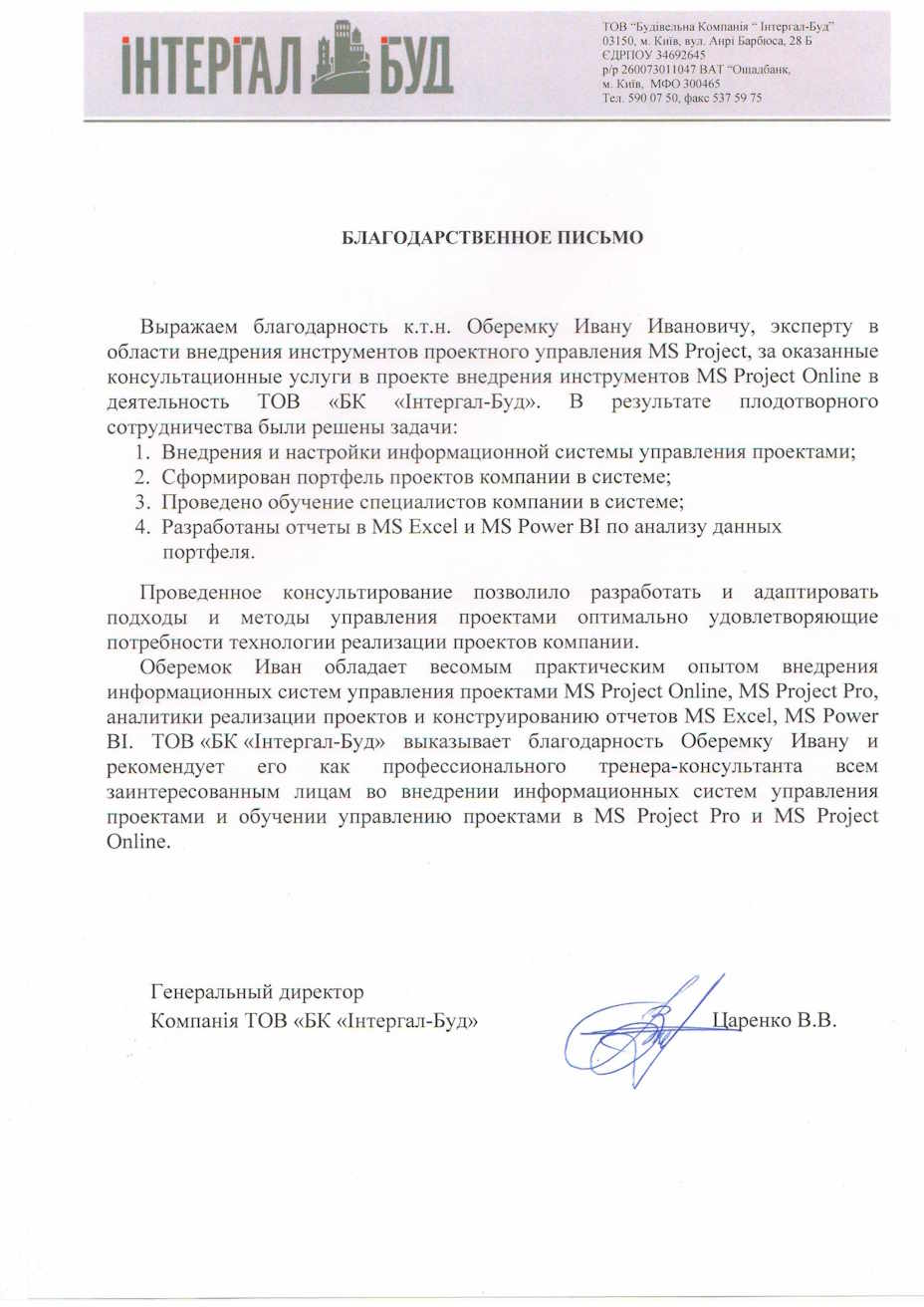
In the development company Intergal-Bud, we implemented a project for deploying and configuring a corporate project management information system based on Microsoft Project Online. The main objective of the project was to create a unified digital environment for planning, monitoring, and controlling the implementation of the company’s construction projects, as well as to increase process transparency and improve resource efficiency.
As part of the project, an in‑depth analysis of the existing management processes was conducted. Based on the results, corporate calendars were configured on the server, taking into account the specifics of the construction industry: seasonality of work, regulatory restrictions, public holidays and weekends, as well as individual schedules of departments. This made it possible to standardize planning and improve the accuracy of project timeline calculations.
The company's projects—covering both large residential complexes and commercial facilities at various stages of construction—were published on the server. For each project, task structuring was performed, dependencies were configured, milestones were defined, and schedules were adjusted in accordance with corporate standards.
Corporate resources necessary for effective budget management and contractor coordination were also created. Financial resources were configured with budgeting parameters, cost rates, and allocation rules. A centralized contractor database was developed, including information on availability, qualifications, work types, and collaboration history. This increased transparency during contractor selection and optimized resource loading.
Another important stage was configuring views for the project portfolio, individual projects, and the corporate resource pool. User‑friendly dashboards were created for executives and project managers, allowing them to monitor project status, schedule deviations, critical paths, resource utilization, and key performance indicators. Individual views were tailored to the needs of different management levels—from top executives to construction site supervisors.
Additionally, analytical reporting based on Microsoft Power BI was developed. Interactive visual reports were created to display project execution dynamics, financial metrics, resource distribution, risk analysis, and completion forecasting. Integration of Power BI with Project Online enabled company leadership to access real‑time data and make informed management decisions.
The implementation of the project resulted in a modern digital system for managing construction projects, increasing process transparency, improving schedule and budget control, and strengthening collaboration across company departments